
The Archive
The precedent behind today's sports.
- 1922 May 29, 1922
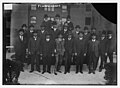 Federal Baseball Club v. National League The Supreme Court ruled that baseball wasn't interstate commerce — a legal fiction even at the time — and granted MLB a full antitrust exemption no other league has ever gotten. A century of exceptions, protections, and leverage baseball's owners have used ever since traces back to this one holding. The exemption everyone assumes is normal is actually the outlier.
 - 1971 March 1, 1971
 Haywood v. National Basketball Association Haywood left college early, signed with a rival league, then tried to enter the NBA before its mandatory four-year waiting period was up. The league said no. The Court let him play. Every underclassman who has entered a draft early since is standing on Haywood's exception.
 - 1971 June 28, 1971
 Clay, aka Ali v. United States Muhammad Ali refused induction into the armed forces in 1967 on religious grounds and was convicted of draft evasion. His local board had denied him conscientious-objector status without stating why. The Justice Department's own letter to the appeal board had offered three separate grounds for denying the claim, and by the time the case reached the Supreme Court the Court could not determine which of the three the board had actually relied on. Unable to review a decision that gave no reasons, the Court reversed the conviction unanimously, 8-0.
 - 1972 June 19, 1972
 Flood v. Kuhn Curt Flood refused a trade and sued the reserve clause directly, all the way to the Supreme Court — and lost. The Court acknowledged baseball's antitrust exemption was an anomaly, then upheld it anyway on legal inertia. Flood's loss did something his win couldn't have: it convinced the players' union that courts weren't the way out. Three years later, they found a technicality instead.
 - 1972 June 23, 1972
 Title IX of the Education Amendments of 1972 Thirty-seven words, and none of them mention sports: no person shall, on the basis of sex, be excluded from participation in, denied the benefits of, or subjected to discrimination under any education program or activity receiving federal financial assistance. Congress was not writing an athletics statute. It became one, because school athletic programs are federally funded education programs, and the statute does not exempt them.
 - 1975 December 23, 1975
 The Messersmith–McNally Arbitration Marvin Miller had two pitchers play an entire season without signing new contracts — on purpose. When the season ended, he argued their old deals' one-year renewal clause had already been used up. The arbitrator agreed. No valid contract, no reserve right. Modern free agency wasn't born from a lawsuit. It was born from a technicality nobody else had thought to exploit.
 - 1976 February 3, 1976
 Robertson v. National Basketball Association Oscar Robertson lent his name to a six-year antitrust fight against the NBA's reserve clause — and against a proposed merger with the ABA that would have killed competing bids for every player in the league. The settlement landed the same year the merger did. Block the merger, and the reserve clause had nowhere left to hide.
 - 1993 April 30, 1993
 White v. National Football League The NFLPA did something almost nobody expects a union to do: it dissolved itself. No union, no labor exemption protecting the league's employment rules from antitrust scrutiny. Reggie White and the other plaintiffs sued directly — and won the free agency and salary cap system the NFL still runs on. Sometimes the fastest way to gain leverage is giving up the thing that was limiting you.
 - 2001 May 29, 2001
 PGA Tour, Inc. v. Martin A tour golfer with a circulatory condition asked to ride between shots. The PGA Tour said walking was a substantive rule of competition and that waiving it for anyone would fundamentally alter the event. The Court disagreed on both questions it faced: the tour is a place of public accommodation under the ADA, and letting one player ride did not alter the nature of the competition, because the rule the tour was defending was about fatigue rather than about shotmaking.
 - 2010 May 24, 2010
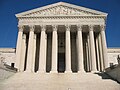 American Needle, Inc. v. National Football League The NFL argued its 32 teams were legally a single entity when they licensed merchandise together — meaning antitrust law couldn't reach how they carved up that business. A unanimous Supreme Court said no: 32 separately owned teams acting together is exactly the kind of coordination antitrust law exists to watch. Every modern licensing, merchandise, and media rights arrangement still has to clear the standard this case set.
 - 2018 May 14, 2018
 Murphy v. National Collegiate Athletic Association New Jersey wanted to repeal its own ban on sports betting, and a federal statute said it could not. The Court held that PASPA's prohibition on state authorization commandeered the states: Congress may regulate sports gambling itself, but it cannot order a state legislature to keep a prohibition on its books. The decision did not legalise anything. It removed the federal instrument that had kept every state but a handful out of the market, and the states moved into the space within months.
 - 2019 April 30, 2019
 Semenya v. IAAF The IAAF's 2018 Eligibility Regulations required certain female athletes with a 46 XY chromosome pattern and natural testosterone above 5 nmol/L to medically lower it to compete in events from 400 meters to the mile. Caster Semenya and Athletics South Africa challenged the regulations before the Court of Arbitration for Sport as discriminatory, unnecessary, unreliable, and disproportionate. A three-member panel found, 2-1, that the regulations were indeed discriminatory on their face -- and ruled for the IAAF anyway, holding that discrimination in sport is lawful if it is a necessary, reasonable, and proportionate means to a legitimate aim. Semenya declined to lower her testosterone and has not competed in her preferred events since.
 - 2021 June 21, 2021
 NCAA v. Alston A unanimous Supreme Court struck down the NCAA's limits on education-related benefits — a narrow ruling, on paper. But Justice Kavanaugh's concurrence said the rest of the NCAA's compensation rules wouldn't survive the same scrutiny if challenged directly. The NCAA didn't wait to find out. Days later, NIL was permitted.
The Player Is Not Property
Who controls the athlete's labour?
Four confrontations that moved control of an athlete's own labour from the institution toward the athlete. Flood exposed the moral problem and lost. Seitz found the contractual escape. McNeil and White showed how hard a league could still make genuine mobility even after the principle was won. Bosman carried it across a border. The recurring pattern is that the people who forced each confrontation captured less of the value than those who came after them.
- 1972 June 19, 1972 Flood v. Kuhn Curt Flood refused a trade and sued the reserve clause directly, all the way to the Supreme Court — and lost. The Court acknowledged baseball's antitrust exemption was an anomaly, then upheld it anyway on legal inertia. Flood's loss did something his win couldn't have: it convinced the players' union that courts weren't the way out. Three years later, they found a technicality instead.
- 1975 December 23, 1975 The Messersmith–McNally Arbitration Marvin Miller had two pitchers play an entire season without signing new contracts — on purpose. When the season ended, he argued their old deals' one-year renewal clause had already been used up. The arbitrator agreed. No valid contract, no reserve right. Modern free agency wasn't born from a lawsuit. It was born from a technicality nobody else had thought to exploit.
- 1993 April 30, 1993 White v. National Football League The NFLPA did something almost nobody expects a union to do: it dissolved itself. No union, no labor exemption protecting the league's employment rules from antitrust scrutiny. Reggie White and the other plaintiffs sued directly — and won the free agency and salary cap system the NFL still runs on. Sometimes the fastest way to gain leverage is giving up the thing that was limiting you.
The Door Opens
Who controls the gates?
Who gets through sport's gates, who sets the conditions of entry, and whether those conditions survive legal scrutiny. Ali fought whether licensing authorities could take his livelihood after he confronted the state. Title IX rewrote who was entitled to play at all. Ludtke concerned the workplace surrounding sport rather than the competition inside it. Martin asked whether a rule of the game could be a condition of entry. Four different gates, one question.
- 1971 June 28, 1971 Clay, aka Ali v. United States Muhammad Ali refused induction into the armed forces in 1967 on religious grounds and was convicted of draft evasion. His local board had denied him conscientious-objector status without stating why. The Justice Department's own letter to the appeal board had offered three separate grounds for denying the claim, and by the time the case reached the Supreme Court the Court could not determine which of the three the board had actually relied on. Unable to review a decision that gave no reasons, the Court reversed the conviction unanimously, 8-0.
- 1972 June 23, 1972 Title IX of the Education Amendments of 1972 Thirty-seven words, and none of them mention sports: no person shall, on the basis of sex, be excluded from participation in, denied the benefits of, or subjected to discrimination under any education program or activity receiving federal financial assistance. Congress was not writing an athletics statute. It became one, because school athletic programs are federally funded education programs, and the statute does not exempt them.
- 2001 May 29, 2001 PGA Tour, Inc. v. Martin A tour golfer with a circulatory condition asked to ride between shots. The PGA Tour said walking was a substantive rule of competition and that waiving it for anyone would fundamentally alter the event. The Court disagreed on both questions it faced: the tour is a place of public accommodation under the ADA, and letting one player ride did not alter the nature of the competition, because the rule the tour was defending was about fatigue rather than about shotmaking.
- 2019 April 30, 2019 Semenya v. IAAF The IAAF's 2018 Eligibility Regulations required certain female athletes with a 46 XY chromosome pattern and natural testosterone above 5 nmol/L to medically lower it to compete in events from 400 meters to the mile. Caster Semenya and Athletics South Africa challenged the regulations before the Court of Arbitration for Sport as discriminatory, unnecessary, unreliable, and disproportionate. A three-member panel found, 2-1, that the regulations were indeed discriminatory on their face -- and ruled for the IAAF anyway, holding that discrimination in sport is lawful if it is a necessary, reasonable, and proportionate means to a legitimate aim. Semenya declined to lower her testosterone and has not competed in her preferred events since.
The Campus Cartel Breaks
Who controls the value college athletes create?
For decades the NCAA offered amateurism as the justification for restricting what athletes could be paid, and courts largely deferred to it. Litigation converted that justification from something assumed into something the association had to prove. O'Bannon established that its compensation restraints were commercial restraints subject to ordinary antitrust analysis. Alston and state NIL statutes narrowed the ground further. House then replaced much of the old compensation architecture with direct revenue sharing — the structural break, not a second blow.
The Outer Boundary
Who ultimately gets to make the rules?
Where legal authority over sport stops, approached from two opposite directions. Murphy marked a boundary on government power: Congress could not command states to keep a prohibition in force, and markets moved into the space that opened. Semenya marked a boundary on review: years of challenge produced procedural protection without displacing a governing body's substantive eligibility regime. Law constrains the state more readily than it displaces private sports governance.
- 1922 May 29, 1922 Federal Baseball Club v. National League The Supreme Court ruled that baseball wasn't interstate commerce — a legal fiction even at the time — and granted MLB a full antitrust exemption no other league has ever gotten. A century of exceptions, protections, and leverage baseball's owners have used ever since traces back to this one holding. The exemption everyone assumes is normal is actually the outlier.
- 1971 March 1, 1971 Haywood v. National Basketball Association Haywood left college early, signed with a rival league, then tried to enter the NBA before its mandatory four-year waiting period was up. The league said no. The Court let him play. Every underclassman who has entered a draft early since is standing on Haywood's exception.
- 1976 February 3, 1976 Robertson v. National Basketball Association Oscar Robertson lent his name to a six-year antitrust fight against the NBA's reserve clause — and against a proposed merger with the ABA that would have killed competing bids for every player in the league. The settlement landed the same year the merger did. Block the merger, and the reserve clause had nowhere left to hide.
- 2010 May 24, 2010 American Needle, Inc. v. National Football League The NFL argued its 32 teams were legally a single entity when they licensed merchandise together — meaning antitrust law couldn't reach how they carved up that business. A unanimous Supreme Court said no: 32 separately owned teams acting together is exactly the kind of coordination antitrust law exists to watch. Every modern licensing, merchandise, and media rights arrangement still has to clear the standard this case set.
Historical summaries prepared from published opinions and secondary sources. Commentary and analysis, not legal advice.